
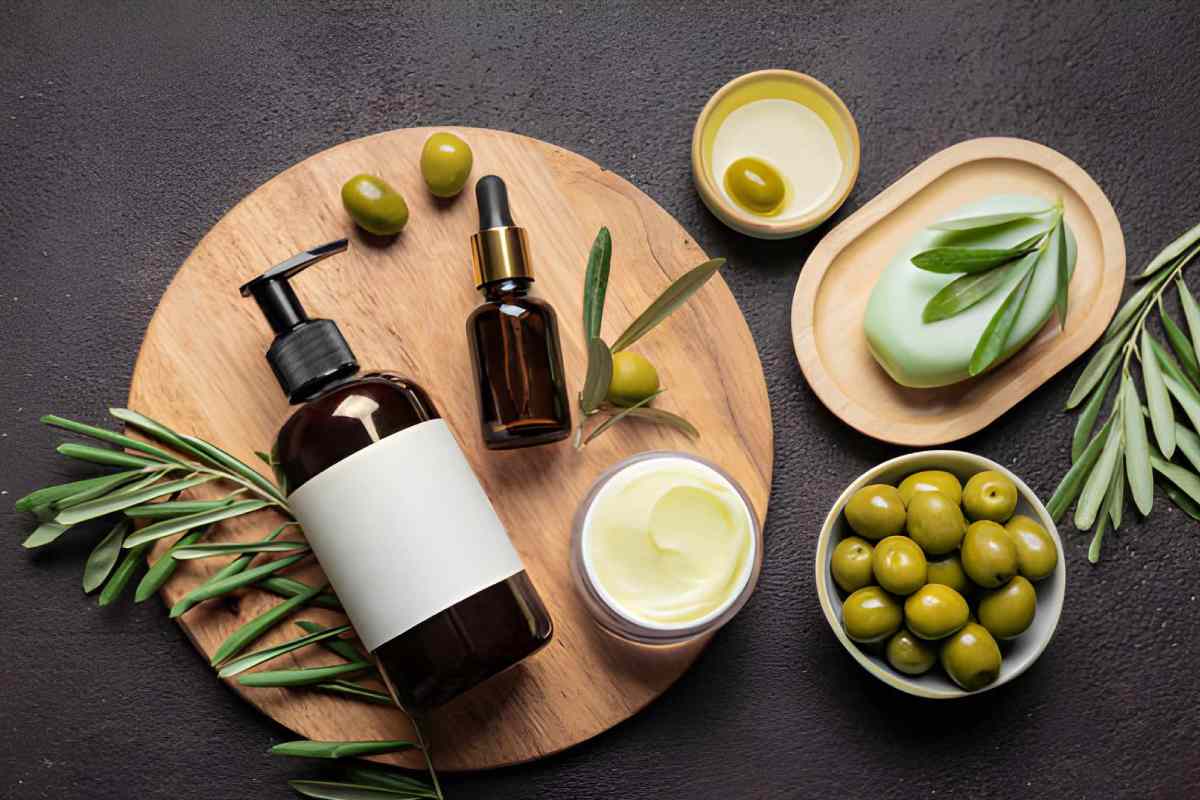

Olive oil is not only an indispensable ingredient in the kitchen, but also a natural beauty product for our skin. This is nothing new. The Phoenicians called it “liquid gold,” and the Greeks used it to achieve soft skin and shiny hair. However, it is only over the centuries, thanks to extensive studies, that its properties and ingredients have been proven to have a beneficial effect on the skin, especially on the face.
Olive oil is renowned for its moisturising, toning, and antioxidant properties thanks to its essential components: vitamin E, which combats free radicals; vitamin A, responsible for skin regeneration; oleic acids, which ensure soft and elastic skin; and, finally, polyphenols, natural antioxidants that nourish the skin and even protect it from damage caused by time and ageing.
Olive Oil for Facial Cleansing
One of the best benefits of olive oil for facial skin is its cleansing function. A fat that removes other fats? That’s right. What at first glance seems like a paradox turns out to be an effective method: olive oil can dissolve dirt, pollution, sebum, and makeup from the skin with a gentle yet thorough cleanse.
The necessary steps are easy to follow: apply half a teaspoon of olive oil, preferably extra virgin, to your dry face, then gently massage it in with your hands.
After massaging, you can wash your face in two ways:
You can use a damp microfiber cloth, which also acts as a gentle exfoliant.
Or you can remove the oil with your daily foaming facial cleanser for an effective yet gentle “double cleanse.”
To find out which cleansing method is best for your skin, we recommend experimenting at different times, as skincare varies greatly depending on individual needs and, depending on the climate, requires specific care.
Natural Exfoliator for Normal Skin
Olive oil is a natural exfoliant that removes impurities and combats dry skin. The result is incredibly soft and silky skin. Only a few high-quality ingredients are needed for an olive oil scrub.
Sea Salt Scrub:
Mix half a tablespoon of extra virgin olive oil with half a tablespoon of sea salt, then massage it into your T-zone, where most imperfections tend to appear. Then, wash your face with warm water.
Cane Sugar Scrub: The method and quantities are the same. Cane sugar is often especially suitable for sensitive skin.
Olive Oil to Reduce Wrinkles
Thanks to its emollient properties, olive oil is ideal for combating the first signs of ageing.
The most common treatment is also the simplest: apply a few drops of olive oil to a cotton pad and gently wipe it over a clean, dry face. The antioxidant and soothing properties of polyphenols and oleic acids act directly on the skin, helping prevent normal skin ageing and the appearance of the first wrinkles.
It can be used on the face for specific anti-wrinkle massages once a week to obtain lasting results.
Treat yourself to a few minutes of relaxation. Put on your favourite music, light a candle, tie back your hair, and cleanse your face.
Apply a tablespoon of olive oil to your face, then gently massage it in with your hands. Follow these five simple steps:
Starting at the chin, make small circles with your fingertips along the jawline up to your ears.
Move to the nasolabial folds, gently pulling them outward by placing your index and middle fingers on either side of your mouth and pressing to push your fingers towards your cheekbones;
Continue with circular motions from your cheekbones to your temples.
Next, place your fingertips on either side of your nose and apply gentle pressure to your forehead and along your brow bone.
Don’t forget your neck: starting at your collarbone, move upwards to your chin with circular motions.
For a quicker yet effective massage, you can use a jade roller, perfect for reducing puffiness and wrinkles and giving your skin a refreshing boost. After applying a tablespoon of oil to your face, massage your skin with the roller in circular motions, moving from the bottom to the top and from the centre outwards.
